A healthy dinner is less about a perfect macro chart and more about a plate that works after a real day. Recent U.S. dietary guidelines emphasize getting 1.2-1.6 g of protein per kg of body weight (about one palm-sized portion of lean protein at each meal) while limiting refined grains and added sugars. At dinner,
use that as a flexible target: one clear protein, one fiber-rich carb, two colorful plants, and enough healthy fat to make the meal satisfying.

What Is a Healthy Dinner?
A healthy dinner combines lean protein, complex carbohydrates, colorful vegetables, and healthy fats in portions you can repeat. Harvard’s Healthy Eating Plate recommends filling ½ of your plate with vegetables and fruits, ¼ with whole grains, and ¼ with protein sources like fish, poultry, beans or nuts, while limiting refined grains and processed meats. The useful takeaway is simple: build the plate before you build the recipe, then choose sauces, spices, and toppings that make those basics taste specific.

For portion sizes, the hand guide is more useful than weighing dinner every night: a palm of lean protein, a fist of complex carbs, a cupped hand of fruit or starchy vegetables, and a thumb of cheese, nuts, avocado, or oil. Adjust upward for training days or very active jobs, and down when the meal is already rich.
Benefits of Balanced Dinners

Balanced dinners should solve three evening problems: hunger now, energy later, and leftovers that still taste good tomorrow. Research from a community hospital’s wellness program notes that whole foods like fruits, vegetables and lean proteins provide sustained energy and prevent blood-sugar crashes. Instead of treating “balanced” as bland, use it as a checklist: fiber for fullness, protein for repair, produce for volume, and fat for flavor.
How to Create Balanced Dinners
Start with the plate method, then make it taste like a specific cuisine. Fill half your plate with vegetables and fruits, one-quarter with whole grains and one-quarter with lean protein. Follow these tips to build balanced dinners quickly:
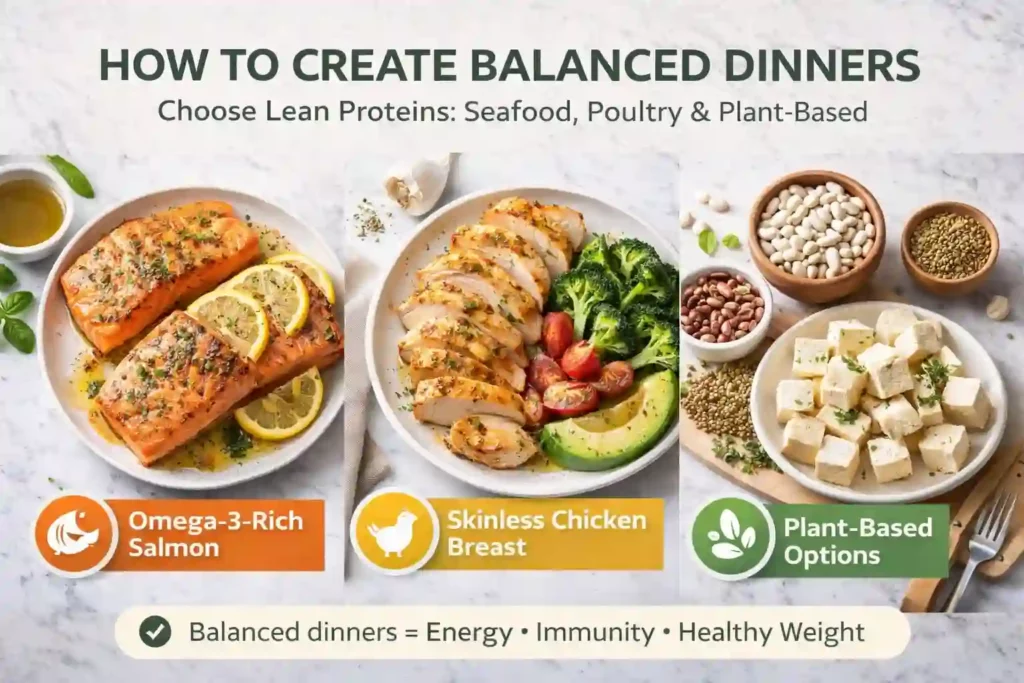
Choose a protein that matches the night. Fish and shrimp cook fast, chicken and turkey are easy for meal prep, beans and lentils stretch the budget, tofu absorbs sauces, and lean beef works well in smaller portions with plenty of vegetables. Let the protein guide the seasoning, then fill the rest of the plate around it.
- Opt for complex carbohydrates: whole grains like brown rice, quinoa and whole-wheat pasta add fiber, texture, and a steadier base than refined grains.
Pile on vegetables and fruits: aim for variety and color. Vegetables add fiber, vitamins, and contrast.
Include fats for flavor: add avocado, nuts, seeds, or a drizzle of olive oil. - Watch portions: Use the hand method (palm for protein, fist for grains/vegetables, cupped hand for fruits) to control portions.
- Plan ahead: the Canyon Ranch nutrition team suggests planning meals around your schedule, following a simple formula (vegetables/fruit + protein + complex carb + healthy fats), stocking your pantry with healthy staples and repurposing leftovers.
Featured Dinner Recipes
The dinner ideas below are meant to be used like templates. Keep the protein, vegetable, carb, and sauce logic, then adjust portions, sodium, and toppings to fit your household.
Salmon Bowls with Coconut Rice

This bowl balances rich salmon with coconut rice, mango, cucumber, avocado, and edamame. To keep it dinner-friendly, use a moderate scoop of rice, add extra cucumber or greens, and keep the sauce bright with lime. Salmon brings satisfying protein and omega-3 fats; edamame and avocado add fiber so the bowl feels complete instead of just heavy.
view recipeChicken Shawarma

Chicken shawarma works well for healthy dinners because the flavor comes from spices, acid, and browning, not from a heavy sauce. Marinate chicken with cumin, turmeric, paprika, garlic, lemon, and yogurt or olive oil, then roast or grill it. Serve with pita or rice, plus cucumber, tomato, cabbage, and a yogurt sauce. It also stores well for lunch bowls the next day.
view recipeSlow Cooker Chicken Tacos

Slow cooker chicken tacos are useful on nights when dinner needs to cook while you do something else. Shredded chicken with salsa and spices can go into whole-grain tortillas, lettuce cups, rice bowls, or salad. Add cabbage, beans, avocado, and pico de gallo for fiber and freshness. Cook once, then use the leftovers for nachos, soup, or a high-protein lunch.
view recipeBeef Bulgogi Lettuce Wraps

Beef bulgogi lettuce wraps give you the satisfaction of a takeout-style dinner with more control over portions. Use lean beef, keep the marinade punchy, and add black rice, cucumber, carrots, or kimchi for contrast. Lettuce makes the wrap feel lighter, while a small amount of rice keeps it filling. Low-sodium soy sauce helps if sodium is a concern.
view recipeZucchini Frittata with Feta

A zucchini frittata is the quiet weeknight option: eggs for protein, zucchini for volume, feta for salt and tang. Bake it once and serve warm with salad, or chill slices for breakfast and lunch. If you need a fuller dinner, add roasted potatoes, beans, whole-grain toast, or a side of fruit.
view recipeWeeknight Tips & Variations
Balanced dinners are easier when the pantry already has the building blocks. Keep one fast protein, one whole grain, one canned or frozen vegetable, and one sauce or spice blend ready. Then dinner becomes assembly rather than a decision you have to remake from zero.
- Meal‑prep proteins: Cook extra servings of chicken, salmon or beans; use them in salads, wraps or stir‑fries later.
- Use the slow cooker or pressure cooker: Slow Cooker Chicken Tacos take only five minutes to prep and cook while you’re working.
- Make sheet‑pan or one‑pot meals: Roast vegetables, lean meats and whole grains on one sheet for minimal clean‑up.
- Repurpose leftovers: Use leftover bulgogi beef in rice bowls or lettuce wraps; flake leftover salmon into salads; slice frittata for breakfast sandwiches.
- Kid‑friendly tweaks: Serve sauces (like sriracha) on the side, add extra fruit (mango, pineapple), and let children assemble their own bowls.
- Flavor variations: Change up herbs and spices try Cajun seasoning on salmon, curry powder in chicken shawarma or Italian herbs in frittata; swap brown rice for quinoa or cauliflower rice for a low‑carb option.
Additional Resources
For further reading on balanced dinners and high‑protein nutrition, explore these authoritative resources:
- Dietary Guidelines for Americans 2025–2030: summarised by the National CACFP Association, highlighting the push for higher protein intake and limiting processed foods.
- Harvard T.H. Chan School of Public Health: Healthy Eating Plate explains how to build balanced meals with vegetables, whole grains, and protein foods.
- Mayo Clinic: Healthy meals start with planning provides tips on portion sizes and choosing nutrient‑dense foods.
- Monadnock Community Hospital: Balanced nutrition for optimal health discusses practical ways to use whole foods in everyday meals.
- Real Food Dietitians: Slow Cooker Chicken Tacos for more high‑protein recipes with nutrition breakdown.
FAQ
What portion sizes are appropriate for healthy dinners ?
Use the plate method and hand measurements to gauge portions. Divide your plate into half vegetables/fruits, one‑quarter lean protein, and one‑quarter complex carbohydrates. A palm‑sized portion of protein (~3 oz), a fist of whole grains (~1 cup) and a cupped hand of fruit or starchy vegetables (~½ cup) help keep calories in check. Using smaller plates and serving bowls can also prevent overeating.
How can I make a balanced dinner when I’m short on time ?
Plan ahead and rely on simple formulas. Prep proteins and vegetables in advance; stock your pantry with whole grains, canned beans, frozen vegetables and healthy fats. The Canyon Ranch experts recommend building meals using a four‑part formula (vegetables/fruit + protein + complex carb + healthy fats) and repurposing leftovers. Slow cooker dishes like shredded chicken or sheet‑pan dinners offer hands‑off cooking while you focus on other tasks.
Are these dinners family‑friendly and kid‑approved ?
Yes most recipes are flexible and can be adjusted to suit different tastes. Salmon bowls can be customized by omitting spicy sauce and doubling the fruit for kids. Slow cooker tacos allow each family member to assemble their own; bulgogi wraps and frittatas can be paired with kid‑friendly sides like rice or fruit. Encourage children to choose their toppings and involve them in preparation it increases acceptance of new foods.
Can I freeze leftovers or reheat these meals ?
Many high‑protein dinners reheat well. Cooked salmon and coconut rice can be stored in the refrigerator for a day or two; chicken shawarma and slow‑cooker chicken can be refrigerated for 3–4 days and reheated thoroughly. Frittata slices and bulgogi beef freeze well when wrapped tightly; thaw overnight in the fridge before reheating. Always store leftovers in airtight containers and label them with the date.
Conclusion
A good healthy dinner should leave you satisfied, not impressed by how strict it was. Use the plate method as the base, choose protein you enjoy, add vegetables generously, and keep whole grains or beans in the rotation for steady energy. The recipes in this guide show how salmon, chicken, beef, eggs, tofu, and legumes can all fit when the plate is balanced and the flavors are clear.