High-protein meals are useful when they solve a real eating problem: staying full through a busy morning, recovering after a workout, or making dinner feel satisfying without constant snacking later. Protein supports muscle tissue, hormones, enzymes, and overall meal balance, but the meal still has to taste good and bring fiber, color, and healthy fats.

However, recent research reminds us that quality and balance matter as much as quantity. In 2026, the smarter question is not “How can I add more protein to everything?” but “What protein source, carb, vegetable, and fat make this meal complete?” This guide focuses on practical plates, prep choices, and swaps that fit U.S. kitchens without turning every meal into a supplement routine.
Table of Contents
Table of Contents
What Defines a High Protein Meal?
A high-protein meal does not need to be extreme. The Recommended Dietary Allowance (RDA) for protein is about 0.8 grams per kilogram of body weight (0.36 grams per pound). This translates to about 53 grams a day for a sedentary 140-pound woman or 56 grams a day for a 70 kg adult man. Several U.S. dietitians recommend aiming for 25-30 grams of protein per meal to support satiety and muscle maintenance. The newly revised federal dietary guidelines also discuss higher targets for some adults, though experts caution against focusing solely on numbers. Use those ranges as context, then judge the whole plate.

Look at the protein “package,” not only the grams. Salmon brings omega-3 fats, beans bring fiber, Greek yogurt adds calcium, eggs bring choline, and tofu or tempeh absorb bold sauces. A better high-protein meal pairs that source with vegetables, fruit, whole grains, beans, or healthy fats so the plate delivers more than one nutrient.
How Protein Helps a Meal Feel Complete
Fullness and meal timing

Protein can make meals feel more substantial, especially when paired with fiber-rich carbs instead of refined ones. The practical goal is a plate that keeps you comfortable between meals without turning every dish into a protein project.
Muscle maintenance and growth

Protein is part of muscle repair, but it works best alongside enough total food, strength training, sleep, and recovery. Spread protein across the day rather than saving it all for dinner.
Portion balance

For portion balance, protein helps most when it makes the whole meal more satisfying. Pair it with vegetables, beans, whole grains, potatoes, or fruit so the meal has texture and volume instead of relying on protein alone.
Protein needs with age
Protein needs can change with age, activity, appetite, and health context. Meals are easier to repeat when protein is paired with calcium-rich foods, colorful produce, and textures that are easy to enjoy.
How to Build High Protein Meals
Center on lean or plant‑based proteins

Choose fish, poultry without skin, lean cuts of beef or pork, beans, lentils, tofu, tempeh, nuts, and seeds. The American Heart Association recommends lean or plant proteins and advises limiting processed meats. A simple weekly rhythm works well: seafood once or twice, beans or lentils several times, poultry or eggs when convenient, and red meat in smaller, intentional portions.
Include fiber‑rich carbohydrates
Do not remove carbohydrates just because the meal is high in protein. Whole grains, potatoes, corn, beans, lentils, and fruit bring fiber, minerals, and energy. They also make protein meals feel like meals, not just toppings on a plate.
Add plenty of vegetables and fruits

The Dietary Guidelines for Americans emphasize vegetables and fruits at every meal. For high-protein plates, use produce to add volume and contrast: crisp cabbage with tacos, cucumber with salmon bowls, broccoli with beef, greens in eggs, or roasted peppers with tofu.
Choose healthy fats

Avocado, nuts, seeds, olive oil, tahini, and yogurt-based sauces help carry flavor and improve satisfaction. Keep the portion intentional: enough to make the meal enjoyable, not so much that it crowds out vegetables or grains.
Mind portion sizes
A quick visual target is 1/4 plate protein, 1/4 plate whole grain or starchy vegetable, and 1/2 plate produce. For cooked meat or poultry, three to five ounces often lands in a useful protein range, but beans, tofu, eggs, and dairy can reach the goal too when combined thoughtfully.
Avoid highly processed foods
Be careful with “high protein” processed foods that bring a lot of sodium, saturated fat, sweeteners, or very little fiber. A protein bar or deli meat sandwich can help in a pinch, but the daily foundation should still be recognizable food.
Featured High Protein Recipes
Lemongrass Broth Bowls with Yellow Curry Chicken

These broth bowls are built around aroma first: lemongrass, ginger, lime, shallots, and coconut milk make the chicken feel comforting without needing a heavy sauce. The rice makes the bowl filling, while herbs keep it bright. It is a good example of a high-protein meal that still feels like dinner, not meal prep homework.
Charred yellow curry chicken adds the main protein, and the broth carries the flavor through every spoonful. Serve it over rice for a balanced bowl, or use cauliflower rice when you want something lighter. Mint, cilantro, lime, and sliced chiles are not garnish here; they are what keep the bowl fresh.
For a vegetarian version, use tofu, chickpeas, or a mix of both. Press tofu before cooking so it absorbs the broth better, and add chickpeas near the end so they stay tender instead of mushy.
view recipeSesame Beef and Broccoli

This quick stir-fry works because the beef is sliced thin, the broccoli stays crisp, and the sauce is strong enough to coat rather than drown the plate. Serve it with brown rice when you want lasting energy or cauliflower rice when you want a lighter bowl. For a plant-based version, tempeh or extra-firm tofu can use the same garlic-ginger sauce.
view recipeCilantro Lime Chicken and Lentil Rice Bowls

These bowls are built for meal prep: shredded chicken, lentils, brown rice, salsa verde, cilantro, lime, jalapeno, onion, and garlic. Lentils add plant protein and fiber, chicken adds lean protein, and avocado or cotija gives the bowl enough richness. For a vegetarian version, double the lentils and add roasted peppers or corn.
view recipeSpicy Peanut Tofu Bowls
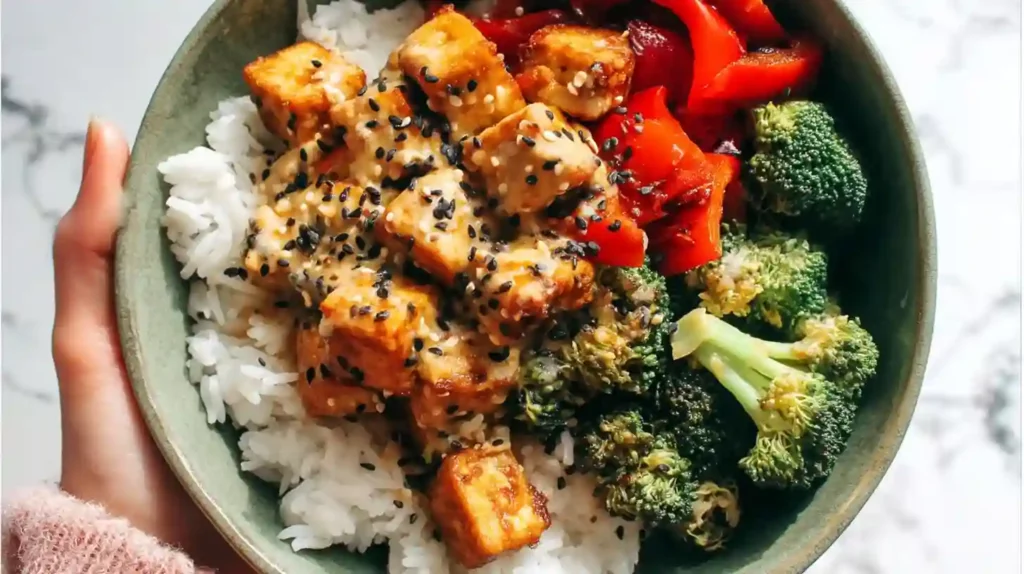
Crispy tofu bowls work best when the tofu is pressed, seasoned, and baked or air-fried until the edges firm up. Pair it with roasted vegetables, rice, and a peanut sauce made with peanut butter, soy sauce, rice vinegar, sesame oil, and chile paste. Add cabbage or cucumbers after reheating so the bowl keeps crunch.
view recipeSheet Pan Jambalaya

Sheet pan jambalaya is the convenience example: shrimp, sausage, onions, bell pepper, Cajun spice, tomato paste, and cauliflower rice cook together with minimal cleanup. Use more shrimp and less sausage for a leaner version, add regular rice for a heartier dinner, or double the vegetables when you want extra volume.
view recipeMeal Prep Tips & Variations
- Aim for balanced macros: Dietitians suggest 25–30 g of protein per meal. Combine protein with fiber‑rich carbohydrates and healthy fats to stay satisfied for 3–4 hours.
- Batch cook proteins: Roast a tray of chicken breasts, tofu or salmon to use in salads, bowls and wraps throughout the week. Use lean cuts and season them simply to allow versatility.
- Use multi‑component meal prep: Cook grains (brown rice, quinoa) and legumes (lentils, chickpeas) ahead of time. Roast a variety of vegetables. Mix and match with your proteins to avoid monotony.
- Embrace plant‑based options: Diversifying your protein sources improves nutrient intake and reduces saturated fat. Swap meat for beans or tofu in stews, tacos or stir‑fries.
- Store safely: Divide prepared meals into airtight containers and refrigerate for 3–4 days or freeze portions for longer storage. Reheat thoroughly before eating.
- Customize seasonings: Use spices like curry paste, Cajun seasoning, lime zest, garlic and herbs to create variety. Many of the featured recipes (e.g., sesame beef and broccoli, lemongrass bowls) are flexible; adjust spice levels or substitute vegetables to suit your taste
Additional Resources & Tools
- Dietary Guidelines for Americans 2025 – 2030: The federal guide encourages a diet rich in vegetables, fruits, whole grains, lean proteins and healthy fats. It also highlights the importance of limiting refined grains and processed foods.
- MedlinePlus Daily Servings Guide: This resource explains how many servings of each food group you need based on age and activity level.
- American Heart Association’s protein recommendations: The AHA explains that about 10–35 % of daily calories should come from protein and provides serving-size examples (e.g., a glass of milk has 8 grams, 3 ounces of lean meat has about 21 grams).
- Harvard Health protein calculator: Multiply your weight in pounds by 0.36 to estimate your minimum daily protein need.
- Johns Hopkins Center for a Livable Future: Their 2026 article encourages diversifying protein sources and emphasizes getting more fiber from plants while cautioning against overemphasizing animal protein.
FAQ
How much protein do I need each day?
Most adults need about 0.8 g/kg body weight to prevent deficiency. Some active adults, older adults, or pregnant people may need more. Use these numbers as general context and ask a healthcare professional for personal advice.
Are these meals suitable for vegetarians or vegans?
Many can be adapted with beans, lentils, peas, tofu, tempeh, nuts, seeds, and whole grains. Vegans should also plan for nutrients such as vitamin B12 and omega-3s through fortified foods, supplements, or professional guidance.
How can protein fit with fitness goals?
Protein can help make meals more satisfying and supports muscle repair when paired with enough food, training, sleep, and recovery. Keep portions moderate, vary protein sources, and include fiber-rich foods.
How do I meal prep high protein meals effectively?
Prepare a protein, grain or bean, and vegetables in advance, then vary sauces and seasonings during the week. Store prepped meals in individual containers and reheat until hot throughout.
Conclusion
High-protein meals are strongest when they are balanced, not maximal. Choose a protein source with a reason, add fiber-rich carbohydrates, fill the plate with vegetables or fruit, and use fats and sauces to make the meal memorable. The goal is food you can repeat: satisfying after one serving, flexible for leftovers, and flavorful enough that it does not feel like a nutrition assignment.