A good zucchini frittata should come out set at the edges, slightly creamy in the center, and full of vegetables that taste cooked rather than watery.

This version uses zucchini, leeks, peas, eggs, lemon zest, chives, and feta for a weeknight dinner that still feels fresh. The key is cooking the vegetables first so the eggs do not have to fight extra moisture in the oven.
The recipe is high in protein for a vegetable-forward meal, but it also needs enough salt, heat, and feta to taste complete. Think of it as a light dinner base that pairs well with salad, bread, farro, or quinoa.
Return to the Healthy Dinner Guide for more healthy dinner inspiration
Table of Contents
Table of Contents
Why This Zucchini Frittata
The main challenge is moisture control. Zucchini releases water quickly, so the stovetop step concentrates the vegetables before the eggs go in.
Why This Method Works
The two-stage method is what keeps the frittata tender. First, the skillet drives off vegetable moisture and builds flavor; then the oven sets the top quickly without drying the eggs all the way through.
Unlike an omelet, a frittata slices cleanly once it rests. One skillet gives 4 servings for dinner or meal prep, and the wedges are sturdy enough to reheat gently.
Flavor & Texture Advantage
Zucchini brings sweetness, leeks add a mild onion flavor, and feta gives salty contrast. Lemon zest and chives keep the eggs from tasting flat, especially after refrigeration.
Ingredients Breakdown (What Actually Matters)

Base Ingredients for Zucchini Frittata
Each base ingredient has a job: eggs set the structure, zucchini and leeks provide volume, peas add sweetness, and feta seasons the whole skillet.
- 8 eggs: Your protein foundation. One frittata delivers around 13g of protein per serving, which keeps you satisfied between meals.
- 1 pound zucchini (sliced thin): Adds volume without calories. Thin slices cook quickly and absorb flavor from the olive oil.
- 4 leeks (thinly sliced): These bring natural sweetness and creaminess when cooked slowly. They’re the secret ingredient most people skip.
- 1 cup frozen peas: Don’t skip this. Peas add fiber, bright color, and a slight sweetness that balances the savory elements.
- 3 ounces feta cheese (crumbled): Tangy, salty, and satisfying. Feta means you don’t need extra salt everywhere else.
Flavor Boosters
- 4 cloves garlic (thinly sliced): Always slice rather than mince for a gentler, sweeter flavor in a longer-cooked dish.
- 1 lemon (zested): A small amount of zest brightens the entire dish without any sharp acidity.
- ¼ cup fresh chives (snipped): Added raw at the end, they maintain their herbaceous punch.
- 5 tablespoons olive oil (divided): Quality olive oil is your cooking medium and flavor base. The split application prevents burning.
- 1 teaspoon kosher salt: Adjust to taste as you build the recipe.
Optional Additions
Once the base works, you can add sautéed mushrooms, spinach, sun-dried tomatoes, or dill. Cook watery add-ins first so the frittata does not turn loose in the middle.
| Ingredient | Why It Works |
|---|---|
| Zucchini | Low calorie, high water content softens quickly, creates volume |
| Leeks | Caramelize into sweetness, add creaminess and depth |
| Eggs | Complete protein with all 9 amino acids, affordable, versatile |
| Feta | Provides tang and saltiness so the dish doesn’t taste flat |
| Peas | Frozen is fine, adds fiber and bright color |
| Lemon zest | Adds brightness without acid, no alcohol needed |
Step-by-Step Method (Optimized for Best Results)
Preparing the Base
Preheat the oven to 425°F before the eggs hit the pan. A hot oven sets the top quickly, which helps prevent a rubbery bottom.
Slice the zucchini into even 1/4-inch rounds and clean the leeks well under running water. Grit hides between leek layers, and uneven zucchini slices cook at different speeds.
Cooking the Vegetables
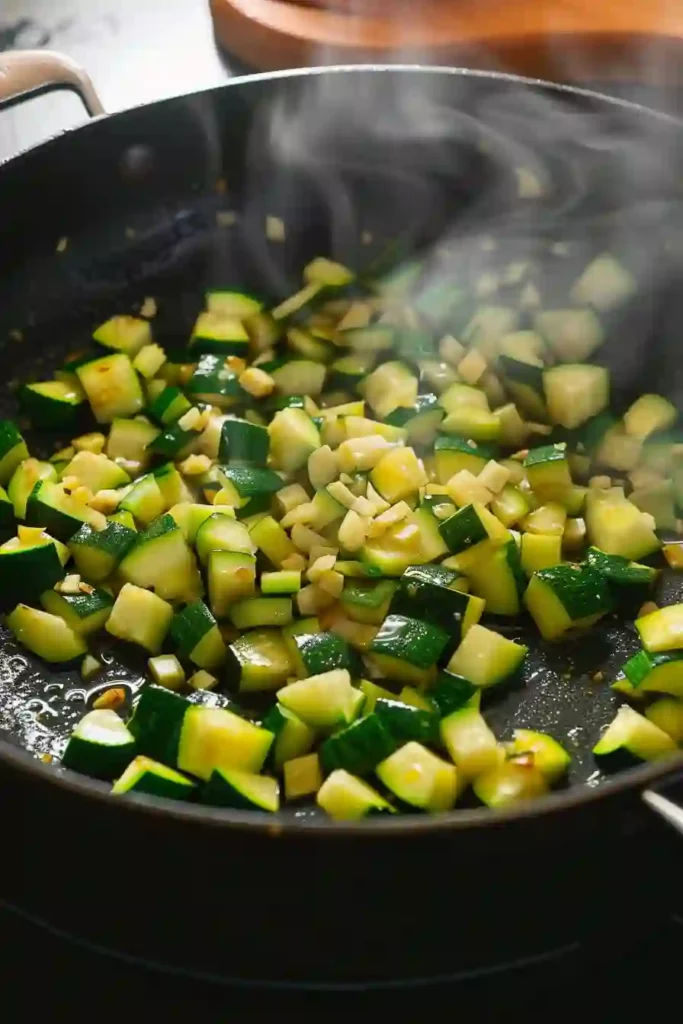
Heat the olive oil in a large oven-safe skillet, then add the zucchini, leeks, and salt. Cook for 8 to 10 minutes, stirring often, until the vegetables soften and the zucchini edges start to turn golden.
Add the garlic only after the zucchini has softened, then cook for about 2 minutes. Stir in the frozen peas at the end so they warm through without losing their color.
Mixing the Egg Mixture

Whisk the eggs with lemon zest, chives, and a small pinch of salt. Taste the vegetables before folding them in; feta adds salt later, but bland vegetables make the whole frittata taste flat.
The Critical Stovetop Step

Wipe out any scorched bits, add the remaining olive oil, and return the skillet to medium-high heat. Pour in the egg mixture and tilt the pan so vegetables are evenly spread.
Cook for 2 to 3 minutes, until the edges begin to set and the bottom has light color. Do not wait for the center to firm on the stovetop; that happens in the oven.
Final Assembly
Scatter the feta over the top, then move the skillet to the 425°F oven for 8 to 10 minutes. Pull it when the top is puffed, the edges are set, and the center has a slight jiggle.
Rest for 2 to 3 minutes before slicing so the eggs finish setting. Serve with arugula, lemon, and a little olive oil for a sharp contrast to the feta.

High-Protein Zucchini Frittata with Feta
Ingredients
- 8 large eggs
- 1 pound zucchini thinly sliced
- 4 leeks thinly sliced, white and light green parts only
- 1 cup frozen peas
- 3 ounces feta cheese crumbled
- 4 cloves garlic thinly sliced
- 1 lemon zested
- 2 tablespoons olive oil
- 1/2 teaspoon salt
- 1/4 teaspoon black pepper
- 1 tablespoon chopped fresh chives optional garnish
Instructions
- Preheat oven to 375°F (190°C). Line an 8-inch oven-safe skillet with parchment paper.
- Heat olive oil in the skillet over medium heat. Add leeks and garlic, sauté 5-7 minutes until softened.
- Add zucchini and peas, cook 3-4 minutes until zucchini is tender. Season with salt and pepper.
- In a bowl, whisk eggs with lemon zest and remaining salt/pepper. Pour egg mixture over the vegetables in the skillet, then sprinkle the crumbled feta evenly over the top.
- Cook on stovetop over low heat, stirring gently, until edges set (5-7 minutes). Place skillet in oven and bake 12-15 minutes, until the center is just set and reaches 160°F / 71°C.
- Let cool slightly before slicing into wedges. Garnish with chives before serving.
Notes
Use fresh zucchini and peas for optimal texture.
Store leftovers in an airtight container in the refrigerator for up to 4 days, or freeze for up to 3 months.
For food safety, cook egg dishes until the center reaches 160°F / 71°C.
You’ll Also Love These Zucchini Frittata

Texture & Cooking Fix Guide
Why It Turns Dry
Dry frittata usually means the eggs stayed in the oven too long. Remove the skillet while the center still has a slight wobble; residual heat will finish the last bit of cooking.
Why It Becomes Dense
If the frittata turns dense, the vegetables may not have cooked down enough before the eggs were added. The eggs should coat the vegetables, not disappear into a wet pile of zucchini.
How to Fix Flavor
If the flavor is flat, season earlier. Salt the vegetables as they cook, taste them before adding the eggs, then let feta provide the final salty bite.
Smart Ingredient Comparison
Fat Choice: Olive Oil vs Butter
Olive oil is useful here because it handles the vegetable saute and fits the Mediterranean flavor of zucchini, leeks, lemon, and feta. Butter can taste good, but it browns faster and can make the skillet taste heavier.
Feta vs Other Cheeses
Feta works because it is salty and tangy in small amounts. Ricotta makes the frittata softer, cheddar makes it richer, and goat cheese gives a similar tang with a creamier finish.
Common Mistakes to Avoid
- Slicing vegetables unevenly: This causes some to overcook while others stay raw. Spend the extra 2 minutes slicing consistently.
- Skipping the stovetop finish: Jumping straight to the oven creates a pale, flavorless bottom. Those 2–3 minutes on the stove build golden color and taste.
- Using room-temperature eggs: Cold eggs take longer to set. Leave eggs out for 10 minutes or run warm water over them.
- Opening the oven door repeatedly: Resist the urge. The temperature drop will prevent even cooking.
- Overseasoning with salt: The feta is salty. Start conservative and taste vegetables before adding eggs.
- Not cleaning the leeks: Sand between layers ruins the final texture. Slice, then rinse each ring.
Best Ways to Serve This Zucchini Frittata
For breakfast or brunch: Serve warm with arugula dressed in lemon and olive oil. The greens cut through the feta and make the plate feel lighter.
For lunch or dinner: Pair a wedge with farro, quinoa, crusty bread, or a tomato salad. The frittata brings protein; the side can bring extra fiber and carbs.
For meal prep: Cool completely, refrigerate slices in a sealed container for up to 4 days, and reheat gently at 300°F for about 10 minutes. Avoid microwaving too long, which can toughen the eggs.
For gatherings: Cut into small squares and serve at room temperature. Let it cool fully first so the pieces hold clean edges on a platter.
Is This Zucchini Frittata Healthy?
Nutritional Balance
Each serving is listed around 310 calories with 13g protein, 18g carbohydrates, and 21g fat. Most of the carbohydrates come from vegetables, while the fat comes from olive oil, eggs, and feta.
The protein and fiber make this more filling than a vegetable side dish alone. Zucchini and peas add about 4g fiber per serving, while eggs and feta provide the protein structure.
Protein & Satiety
With about 13g protein per serving, this frittata can anchor a meal, especially when paired with a salad or whole grain. For a higher-protein plate, add Greek yogurt sauce or a side of beans.
The ingredient list is simple: eggs, vegetables, feta, herbs, lemon, and olive oil. That makes the recipe easy to adapt without relying on packaged sauces or fillers.
FAQ
Why does the texture fail?
The most common issue is overcooking. Remember that the frittata continues cooking from residual heat after leaving the oven. Aim for a barely set center that reaches 160°F / 71°C; it will firm up as it rests. Also ensure your oven is actually at 375°F (use an oven thermometer if you’re unsure).
Can I adjust the ingredients?
Absolutely. Keep the eggs and oil amounts the same, but swap vegetables freely. Mushrooms, spinach, bell peppers, and tomatoes all work beautifully. The cooking time might vary slightly depending on water content.
How do I store it?
Cool completely, then wrap tightly in plastic wrap or store in an airtight container. It keeps refrigerated for 4 days and freezes well for up to 3 months. Reheat gently in a 300°F oven until hot throughout to maintain texture.
Can I make this without feta?
You can use goat cheese, sharp cheddar, or even skip cheese entirely. Just remember that feta adds saltiness and tang, so you’ll need to adjust seasoning if you omit it.
Is this Zucchini Frittata vegetarian?
Yes, completely. Eggs, vegetables, cheese, and olive oil make this naturally vegetarian-friendly.
Can I prep vegetables ahead?
Slice vegetables up to 8 hours ahead and store in separate containers. Don’t mix them together as they’ll release water and become mushy. Cook them fresh for best results.