A healthy breakfast has one job before it has any slogan: it should make the next few hours easier. That can mean steady energy before school drop-off, enough protein after a workout, or a quick meal that keeps you from buying a pastry at 10 a.m. Research from Harvard-affiliated Massachusetts General Hospital also suggests that breakfast timing can reflect broader health patterns, so the goal is not perfection but a repeatable morning rhythm.

A well-balanced morning meal helps refill energy stores and gives you nutrients that are harder to catch up on later. For 2026, the strongest breakfast is practical: protein you enjoy, fiber-rich carbs, fruit or vegetables, and a fat source that makes the plate satisfying. This guide shows how to build that without turning breakfast into a complicated project.
Table of Contents
Table of Contents
What Is a Healthy Breakfast?
Balanced macronutrients and micronutrients
A healthy breakfast works best when it has four parts: protein, fiber-rich carbohydrate, produce, and healthy fat. Johns Hopkins Medicine describes a similar pattern with protein, whole grains, fruits or vegetables, and good fats such as nuts, seeds, and avocados. That could be eggs with toast and fruit, yogurt with oats and nuts, tofu scramble with vegetables, or beans in a breakfast burrito.

Complex carbohydrates from oats, whole-grain bread, potatoes, beans, fruit, or quinoa give breakfast staying power. Healthy fats from avocado, nuts, seeds, olive oil, or yogurt-based toppings make the meal feel finished. Protein helps with satiety, and fiber slows digestion so the energy feels smoother instead of like a quick spike.
Fiber and nutrient density
Fiber is the part of breakfast people often miss when they focus only on protein. Oats, beans, apples, berries, chia, whole grains, seeds, skins, and vegetables add texture and make breakfast feel more complete. They also give the meal more variety than a plate built from protein alone.
The Mayo Clinic recommends that adults consume 25-30 g of fiber daily, yet most people fall short. Breakfast is one of the easiest places to close the gap: add berries to yogurt, stir chia into oats, choose whole-grain toast, or use black beans in eggs or a burrito.
Whole foods over processed breakfast items
Minimally processed breakfasts usually keep you full longer than sweet cereal, pastries, or muffins that are mostly refined flour and sugar. You do not need to ban packaged foods; just read the label like a cook. Look for fiber, protein, and ingredients you can pair with real food.
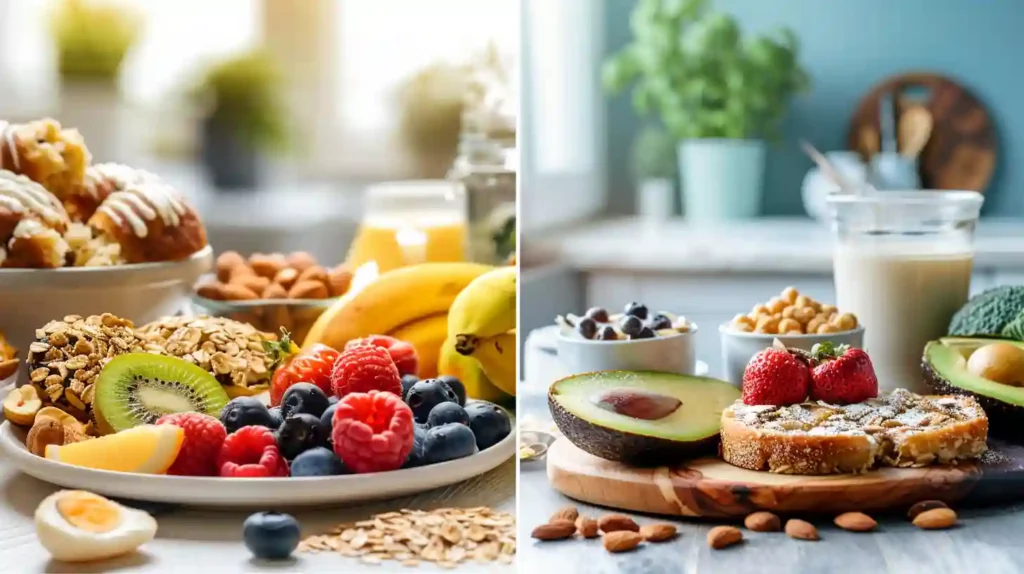
Good shortcuts still count. Plain Greek yogurt, frozen berries, microwave oats, whole-grain bread, canned beans, nut butter, prewashed greens, and hard-boiled eggs can make a better breakfast in five minutes. If you choose cereal, aim for at least 5 g of fiber per serving and keep added sugar low.
Benefits of a Nutritious Breakfast
The benefits of breakfast are easiest to feel when the meal is built for your actual morning.
- Energy and cognitive performance: Breakfast replenishes glycogen stores after overnight fasting and helps the brain function optimally. MSU researchers reported that skipping breakfast was linked to lower cognitive scores and accelerated neurodegeneration.
For focus, combine slow carbs with protein and fat instead of relying on sweet coffee alone. For fullness, add a clear protein source such as eggs, yogurt, tofu, beans, or cottage cheese. For digestion, make fiber visible on the plate with oats, fruit, whole grains, seeds, or vegetables. University of Reading research on walnut-rich breakfasts is a good reminder that small ingredient choices can change how a meal performs.
- Improved nutrient intake: Breakfast eaters are more likely to meet daily recommendations for fiber, calcium and vitamins. Skipping the morning meal can create nutrient gaps that are difficult to fill later in the day.
- Fullness and routine: High-protein and high-fiber breakfasts can feel more satisfying than very low-fiber options. Pair protein with oats, fruit, beans, or whole-grain toast so the meal has enough texture and staying power for your morning.
- Protein distribution: Including protein at breakfast can make the meal easier to balance with lunch and dinner. Eggs, yogurt, tofu, beans, cottage cheese, and nut butters are simple options.
- Meal timing and consistency: Some people prefer breakfast early, while others eat later. The useful goal is a consistent routine that gives you enough food, fiber, and protein for the morning ahead.
- Fiber-rich choices: Oats, whole grains, fruit, beans, nuts, and seeds can make breakfast more filling and varied. They also help the plate feel less dependent on refined flour and added sugar.
- Focus and convenience: A planned breakfast can make busy mornings calmer. Keep a few easy options ready so you are not relying only on sweet coffee or pastries.
How to Build a Balanced Breakfast
Use this simple framework when you do not know what to make. Pick one item from each column and let the flavor decide the final form.

- Start with quality protein. Include lean protein to promote satiety and muscle maintenance. Options include eggs, Greek yogurt, cottage cheese, nut butters, tofu, tempeh or black beans. Eggs provide high‑quality protein and nutrients like choline and vitamin D, while dairy products and soy milk supply calcium and additional protein. Plant‑based proteins from beans, nuts and seeds are excellent for vegans and contribute fiber and healthy fats.
- Choose fiber‑rich carbohydrates. Opt for whole grains such as oats, quinoa, brown rice and whole‑grain bread. These complex carbohydrates provide lasting energy and fiber that supports digestion. If using oats, ensure they are labelled gluten‑free to avoid cross‑contamination; most people with celiac disease tolerate pure oats.
- Add healthy fats. Incorporate sources of unsaturated fats like avocado, nuts, seeds, and olive oil. They add richness, texture, and flavor, so the meal feels complete without needing a heavy sauce.
- Pile on fruits and vegetables. Fruits and vegetables supply vitamins, minerals and antioxidants. Johns Hopkins recommends including at least one serving of fruit or vegetables in your breakfast. Berries, bananas, citrus, leafy greens, tomatoes and peppers all pair well with breakfast dishes and contribute fiber and phytonutrients.
- Mind portion sizes and sugar. Even healthy foods can lead to excess calories if portions are too large. Aim for balanced plates ½ fruits/vegetables, ¼ protein and ¼ whole grains with a small amount of healthy fat. Limit added sugars by choosing unsweetened yogurt and milk alternatives and using fruit or spices like cinnamon to sweeten foods.
- Season and enhance with spices and herbs. Use cinnamon, turmeric, cumin, basil or cilantro to add flavor without extra sodium or sugar. Herbs and spices also add aroma, color, and variety.
Featured Breakfast Recipes
The recipes below are not meant to be rigid meal plans. Treat them as breakfast templates: keep the protein-fiber-fat structure, then adjust the fruit, vegetables, seasoning, and portion size for your routine.
Overnight Oats

Why it works: oats bring fiber and a creamy texture, while milk or yogurt adds protein and richness. The best overnight oats have contrast: soft oats, something juicy like berries or banana, and something crunchy added in the morning. Use certified gluten-free oats if needed.
view recipeGreek Yogurt Bowl with Fruits & Nuts

Why it works: Greek yogurt gives protein, calcium, and tang, so the bowl does not need much sweetener. Add fruit for freshness, nuts or seeds for crunch, and oats or granola when you need more staying power. Keep the base plain and control sweetness with fruit, honey, cinnamon, or vanilla.
view recipeScrambled Eggs with Toast & Avocado
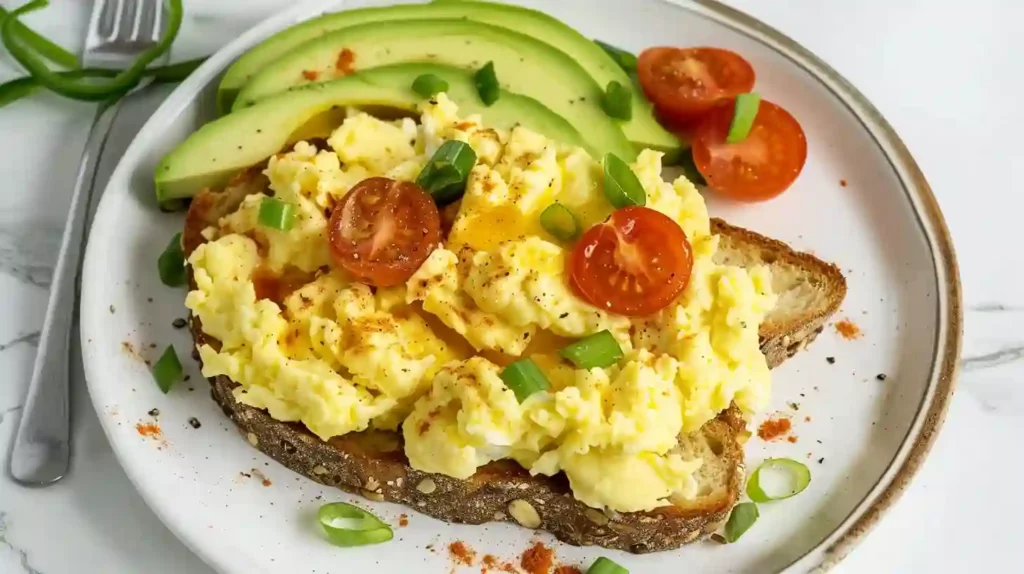
Why it works: eggs bring complete protein and choline, avocado adds monounsaturated fat and fiber, and whole-grain toast makes the plate feel like a meal. Add tomato, greens, salsa, or fruit on the side so the breakfast has color and acidity, not just richness.
view recipeHigh‑Protein Breakfast Burrito

Why it works: a breakfast burrito can carry protein, fiber, vegetables, and flavor in one portable meal. Use eggs or tofu, black beans, peppers, onions, salsa, and a whole-grain tortilla. Black beans are especially useful because they bring both protein and fiber, which helps the burrito feel satisfying without needing a heavy amount of cheese.
view recipeShakshuka

Why it works: shakshuka turns eggs into a vegetable-forward breakfast. Tomatoes, peppers, onions, and spices create a sauce that feels hearty without being heavy, while eggs provide protein. Serve it with whole-grain toast, pita, or beans if you need more energy for a long morning.
view recipeMeal Prep & Variations
Planning ahead
Breakfast prep should remove friction, not create another chore. Keep two options ready: one cold and grab-and-go, such as yogurt jars or overnight oats, and one warm, such as freezer burritos, egg muffins, or reheatable oatmeal. Hard-boiled eggs, chopped fruit, washed greens, and portioned nuts make fast combinations easier.
The Baylor College of Medicine recommends planning ahead, choosing grab-and-go items like yogurt or pre-made smoothies and balancing your plate with protein, fruits and vegetables. The practical move is to set up the ingredients before the week gets busy.
Adapting for special diets
- Vegan: Replace eggs with tofu or chickpea scrambles, use plant‑based yogurt and milk alternatives, and choose vegan cheese or nutritional yeast for flavor. Beans, lentils, nuts and seeds provide
- Gluten‑free: Use certified gluten‑free oats or quinoa flakes for overnight oats and swap wheat tortillas for gluten‑free wraps or collard greens. The Celiac Disease Foundation notes that most people with celiac disease can tolerate pure, uncontaminated oats.
- Lactose‑intolerant: Choose lactose‑free or plant‑based yogurts and milks. Many plant milks are fortified with calcium and vitamin D comparable to dairy.
- Low‑carb or ketogenic: Focus on eggs, tofu, nuts, seeds and non‑starchy vegetables. Replace grains with cauliflower rice, zucchini noodles or leafy greens.
Meal variety and seasonal ingredients

Rotate flavors so healthy breakfast does not become the same beige bowl every day. In winter, use citrus, pears, apples, cinnamon, ginger, and warm oats. In summer, use berries, peaches, tomatoes, herbs, and chilled yogurt bowls. For Mediterranean-inspired breakfasts, include olive oil, tomatoes, cucumbers, hummus, eggs, beans, or whole-grain pita;
Johns Hopkins notes that the Mediterranean diet encourages fruits, vegetables, whole grains, olive oil and lean proteins for breakfast.
Additional Resources & Tips
- Fiber at breakfast: Learn more about soluble vs. insoluble fiber and practical ways to add fiber at breakfast in the Mayo Clinic guide.
- Breakfast research: Review breakfast studies with a practical lens, then choose the options that fit your appetite, schedule, and ingredients.
- Balanced breakfast planning: Explore Baylor College of Medicine’s tips for planning make‑ahead breakfasts and the importance of protein at breakfast.
- Mediterranean diet inspiration: Johns Hopkins Medicine offers examples of Mediterranean‑style breakfasts focusing on vegetables, olive oil and whole grains
FAQ
Is breakfast really the most important meal of the day?
Breakfast can be useful, but no single meal works the same for everyone. A balanced morning meal can help you start with protein, fiber-rich carbohydrates, fruit or vegetables, and enough food for your routine. If you prefer later meals, focus on overall nutrition and ask a healthcare professional if you have medical needs.
Can these breakfasts be prepared ahead of time?
Yes. Overnight oats, chia puddings, and yogurt bowls can be assembled in jars for quick grab-and-go meals. Breakfast burritos freeze well and can be reheated in a skillet or microwave. Hard-boiled eggs, portioned fruit, and pre-washed greens simplify morning assembly.
Can these recipes fit different eating styles?
Yes. Adjust portions, grains, toppings, and added fats based on your needs. For ketogenic or low-carb meals, replace grains with non-starchy vegetables; for Mediterranean or DASH-style meals, emphasize fruits, vegetables, olive oil, legumes, and whole grains. Ask a dietitian for personal nutrition advice.
Can I adapt these recipes if I am vegan, gluten-free, or lactose intolerant?
Yes. For vegan versions, use tofu or chickpea flour instead of eggs and choose plant-based yogurts and milks. For gluten-free meals, select certified gluten-free oats or quinoa and use gluten-free tortillas or collard greens. For lactose intolerance, choose lactose-free yogurt or plant-based alternatives.
Conclusion
A healthy breakfast is not a moral test or a perfect morning aesthetic. It is a small system that makes the day easier.
Build it around protein, fiber-rich carbohydrates, healthy fats, and fruits or vegetables, then choose flavors you will actually repeat.
The strongest routine is the one that survives busy mornings: a few planned staples, seasonal variations, and enough flexibility for appetite, schedule, and budget. Start with one reliable breakfast, then add variety once the habit feels easy.