This spicy peanut tofu bowl is built around three useful textures: crisp-edged tofu, roasted broccoli and peppers, and a spoonable peanut sauce that clings to the rice. It feels filling because the bowl has protein, vegetables, grain, and fat in the same bite.

The key choice is roasting instead of frying. Pressed tofu coated with cornstarch can brown in the oven, the vegetables cook on a separate sheet, and the recipe stays practical for meal prep because you are not managing a pan of hot oil.
Use this when you want a plant-based bowl that can hold up for lunch the next day. The important details are simple: press the tofu, leave space on the pan, and thin the sauce only enough that it pours without becoming watery.
Discover more high‑protein recipes in the High‑Protein Meals Guide
Table of Contents
Table of Contents
Why This Spicy Peanut Tofu Bowls
Why This Method Works
Cornstarch gives pressed tofu a dry outer layer that browns instead of steaming. At high heat, that coating turns lightly crisp while the center stays tender enough to catch the peanut sauce after roasting.
Roasting at 425°F gives the tofu edges color before the inside dries out. It also gives broccoli enough heat to brown at the tips while the peppers soften without collapsing.
Flavor & Texture Advantage
The bowl gets its richness from peanut butter and toasted sesame oil, not from a creamy dressing. With about 24g of protein per serving, it works as a plant-based meal that feels substantial without depending on a large amount of oil.
Roasting separates the flavors before they come together: broccoli gets browned tips, peppers become sweeter, and tofu stays mild enough to take on the spicy peanut sauce instead of competing with it.
Ingredients Breakdown (What Actually Matters)
Base Ingredients
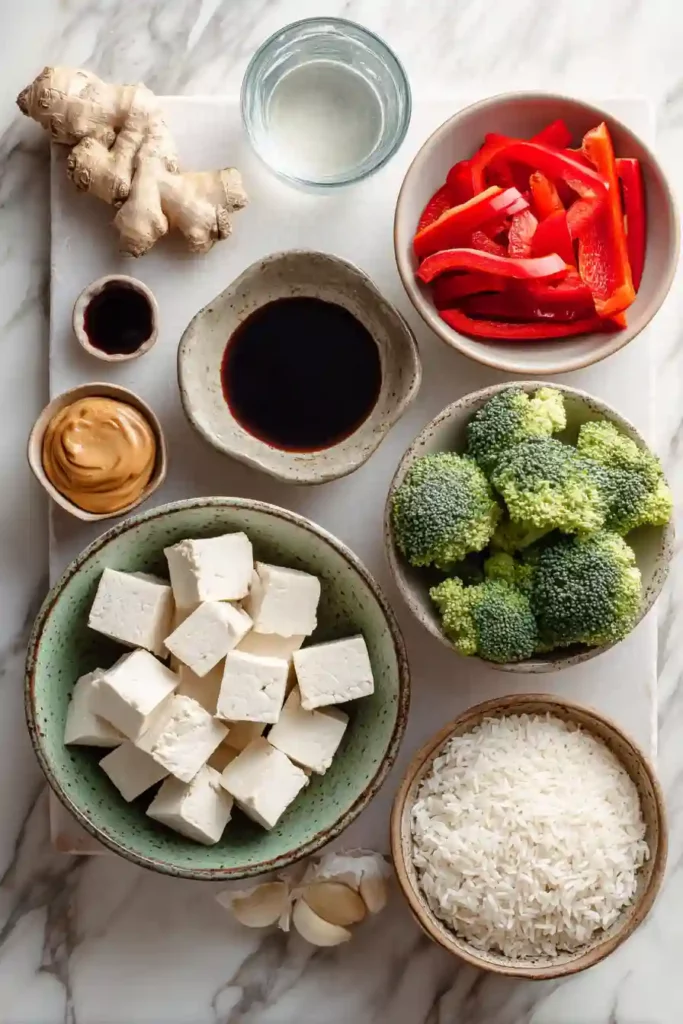
Extra-firm tofu is the best fit because it can be pressed, cubed, and tossed without breaking apart. Softer tofu types hold more water and tend to tear before the cornstarch coating can do its job.
White rice serves as your neutral base it balances the bold spice and lets the peanut sauce shine. If you prefer brown rice or jasmine, both work beautifully and add extra fiber.
Flavor Boosters
The peanut sauce should taste salty, spicy, slightly sweet, and acidic before it touches the bowl. Start with less sambal oelek if you are heat-sensitive, then add more after tasting; rice vinegar is what keeps the peanut butter from feeling too dense.
Optional Additions
Use the toppings for contrast, not just decoration. Lime cuts through the peanut sauce, green onions add a sharp fresh note, and crushed peanuts bring back crunch after the sauce is added.
| Ingredient | Why It Works |
|---|---|
| Extra firm tofu + cornstarch | Creates crispy exterior, absorbs sauce perfectly |
| Olive oil (2 tbsp only) | High heat roasting with minimal calories, supports clean ingredients |
| Sambal oelek | Authentic spice without sweetness, no added sugars |
| Toasted sesame oil | Deep nutty flavor, naturally aromatic |
| Peanut butter (natural) | High protein, creamy base, real whole food ingredient |
| Rice vinegar | Balances richness and keeps the sauce bright |
Step-by-Step Method (Optimized for Best Results)
Preparing the Base

Pressing the tofu is where the texture is won. Wrap each block in clean kitchen towels, place it on a plate, and weigh it down with another plate and something heavy. After 15-20 minutes, the surface should feel drier and ready for cornstarch.
While the tofu presses, prep your vegetables. Cut broccoli into florets about 2 inches across uniform size means even cooking. Slice peppers into thick strips so they caramelize without falling apart.
Coating the Tofu

Cut pressed tofu into cubes about 1-inch on each side. Place in a bowl with cornstarch, then toss very gently. The goal is a light, even coat not clumpy. If you’re too rough, the tofu breaks. If you’re too gentle, you won’t get coverage.
Arrange coated tofu cubes on a parchment-lined baking sheet in a single layer, not touching. Space matters crowding creates steam, which prevents crisping.
Roasting Everything

On a second baking sheet, toss broccoli and peppers with 1 tablespoon of olive oil and salt. Drizzle the remaining tablespoon over the tofu sheet; keeping the tofu and vegetables separate helps both brown instead of steaming together.
Roast both sheets at 425°F for 20–30 minutes. At 15 minutes, give everything a gentle toss. You’re looking for the tofu to turn golden-brown at the edges and the broccoli to develop dark, crispy bits. The peppers should be soft and slightly caramelized.
Making the Sauce
While everything roasts, blend peanut butter, soy sauce, sesame oil, rice vinegar, sambal oelek, honey, ginger, and garlic until completely smooth. Add water a bit at a time until you reach pourable consistency thicker than dressing, thinner than peanut butter.
Taste the sauce before serving. If it tastes heavy, add a little more rice vinegar or lime; if it tastes sharp, add a small spoon of water or peanut butter to round it out.
Final Assembly
Divide the cooked rice into bowls, then add tofu, broccoli, and peppers while they are still warm. Spoon sauce over the top and let some run into the rice, which keeps the last bites from tasting dry.

High-Protein Spicy Peanut Tofu Bowls: Crispy, Flavorful & Meal Prep Ready
Ingredients
For the bowls:
- 2 blocks extra firm tofu
- 2 tablespoons cornstarch
- 1 1/2 tablespoons olive oil
- 1 teaspoon salt
- 2 small heads broccoli cut into florets
- 2 red bell peppers cut into strips
- 1 1/2 cups uncooked brown rice
For the peanut sauce:
- 1/2 cup natural peanut butter
- 1/3 cup low sodium soy sauce
- 1 tablespoon toasted sesame oil
- 2 tablespoons rice vinegar
- 1 to 2 tablespoons sambal oelek or chili paste
- 1 tablespoon honey
- 1 inch fresh ginger peeled
- 1 clove garlic peeled
- 1/4 cup water
Instructions
- Press as much liquid as possible out of the tofu, then cut it into cubes and toss gently with the cornstarch until evenly coated.
- Arrange the tofu on a parchment lined baking sheet, then spread the broccoli and red peppers on a second baking sheet.
- Drizzle the tofu and vegetables with olive oil and season with salt.
- Bake both pans at 425 degrees F for 25 to 30 minutes, until the tofu is golden around the edges and the vegetables are tender and lightly charred.
- While everything bakes, cook the brown rice according to the package directions.
- Make the sauce by blending the peanut butter, soy sauce, sesame oil, rice vinegar, sambal oelek, honey, ginger, garlic, and water until smooth and pourable.
- Divide the brown rice among bowls, then top with the baked tofu, roasted broccoli, and peppers.
- Finish each bowl with a generous drizzle of peanut sauce and serve right away.
Notes
- For a chewier tofu texture, freeze the tofu ahead of time, thaw it in the fridge, and then press it well before using.
- For extra browning, bake the tofu on the top rack for the last few minutes.
- These bowls keep very well in the fridge for 3 to 4 days, making them great for meal prep.
- Top with black sesame seeds, chopped peanuts, or sliced green onions before serving.
- For best texture, store sauce separately and reheat tofu and vegetables before assembling.
You’ll Also Love These Recipes


Texture & Cooking Fix Guide
Why It Turns Soggy
Soggy tofu is usually a moisture problem. Press it well, pat away surface water before adding cornstarch, and leave gaps between cubes so steam can escape. If your oven runs cool, 450°F can help the coating set faster.
Why Vegetables Dry Out
This usually means oven temperature is too low or cooking time is too long. Broccoli and peppers only need 20–30 minutes maximum. Check at 20 minutes if vegetables are already soft, they’re done.
How to Fix Bland Sauce
A flat peanut sauce usually needs salt, heat, or acid. Add sambal oelek gradually, then check the rice vinegar; the sauce should taste bright enough to season plain tofu and rice, not just good on a spoon.
Smart Ingredient Comparison
Oil Choice: Why Less Oil Works Here
This version uses 2 tablespoons of oil because the tofu has cornstarch for browning and the peanut sauce already brings fat. More oil is not necessary unless your sheet pan is very old or the tofu is sticking.
The lighter oil amount matters most when the bowl is part of weekly meal prep. You still get roasted edges and a rich sauce, but the calories are coming mainly from the tofu, rice, peanuts, and vegetables.
Base Alternatives
Brown rice adds chew and extra fiber, which is helpful for meal prep lunches. Cauliflower rice makes the bowl lighter, and quinoa adds a little more protein. Choose the base based on how filling you need the serving to be.
Common Mistakes to Avoid
- Not pressing tofu enough: This is the #1 reason for soggy results. Press longer, not shorter.
- Crowding the pan: Tofu needs space to brown. Use two pans if needed.
- Low oven temperature: 425°F is minimum. Anything lower won’t crisp properly.
- Underseasoning the vegetables: Salt the roasting vegetables directly don’t rely on sauce alone.
- Blending sauce cold: It’s fine to blend at room temperature, but blend it smooth. Lumps indicate under-blending.
- Adding water too fast to sauce: Go slowly you can always add more, but you can’t remove it.
Best Ways to Serve This Spicy Peanut Tofu Bowls
Serve it as a composed bowl when you want the sauce to tie everything together. For mixed preferences, keep tofu, vegetables, rice, and sauce separate so each person can control heat and sauce amount.
For leftovers, pack the sauce separately if you want the tofu to keep more texture. If everything is already mixed, it still works well cold or gently reheated, but the tofu will become softer after a night in the fridge.
You can also use this as a filling for lettuce wraps, stuff it into a wrap, or serve over greens for a lower-carb option.
Is This Recipe Healthy?
Nutritional Balance
The bowl follows the same plate logic described by Harvard’s Healthy Eating Plate : tofu supplies protein, broccoli and peppers add vegetables, rice gives steady energy, and peanut butter plus sesame oil bring unsaturated fat.
At 618.9mg of sodium, it’s moderate mainly from soy sauce. If you’re watching sodium, use low-sodium soy sauce (the recipe already calls for this). At just 63g carbs, it’s not low-carb, but they’re whole-food carbs that keep you satisfied.
Protein & Satiety
The 22.9g of protein per serving is meaningful for a plant-based bowl, especially alongside rice and vegetables. That combination gives the meal more staying power than roasted vegetables alone.
For weight-management meals, the advantage is portion clarity: tofu, vegetables, rice, and sauce are easy to measure, repeat, and adjust without turning the bowl into a bland diet plate.
FAQ
Why does my tofu turn out soft instead of crispy?
Tofu that hasn’t been pressed enough is the culprit 90% of the time. Water in tofu creates steam during roasting, which prevents crisping. Press for at least 20 minutes with weight on top. Also verify your oven temperature with a thermometer ovens often run cooler than indicated.
Can I prep this ahead for meal prep?
Yes, this is incredibly meal prep friendly. Cook everything and store separately: rice in one container, tofu and vegetables in another, sauce in a third. They’ll keep 3 to 4 days. Assemble fresh when you’re ready to eat, or assemble and eat within 2 days. The crispiness lasts better this way.
How do I adjust the spice level?
Sambal oelek is highly adjustable. Start with 1 tablespoon, taste, and add more up to 3 tablespoons. If you go over your spice preference, add a bit more honey to balance. You can also serve sauce on the side and let people add their own amount.
What if I don’t have sambal oelek?
Sriracha works beautifully use the same amount. Chili paste, red pepper flakes mixed with a bit of water, or even hot sauce work. The flavor profile shifts slightly, but the result is still delicious and spicy.
Can I reduce the sugar in the sauce?
Absolutely. Start by cutting honey to 1 tablespoon instead of 2. The sauce will taste more savory and spicy-forward. You can reduce it to 1 teaspoon if you prefer minimal sweetness just taste as you go. The sweetness balances spice, so going too low makes it one-note.
How do I store leftovers?
Store components in separate airtight containers in the refrigerator for 3 to 4 days. Keep sauce separate if possible it keeps tofu crispier longer. You can reheat tofu and vegetables in a 350°F oven for 10 minutes to restore crispiness, or eat cold.