These healthy turkey meatballs are built for meal prep, but the texture depends on moisture control. Lean turkey can dry out quickly, so grated onion, Greek yogurt, Parmesan, garlic, and herbs all have a job in keeping the meatballs tender.
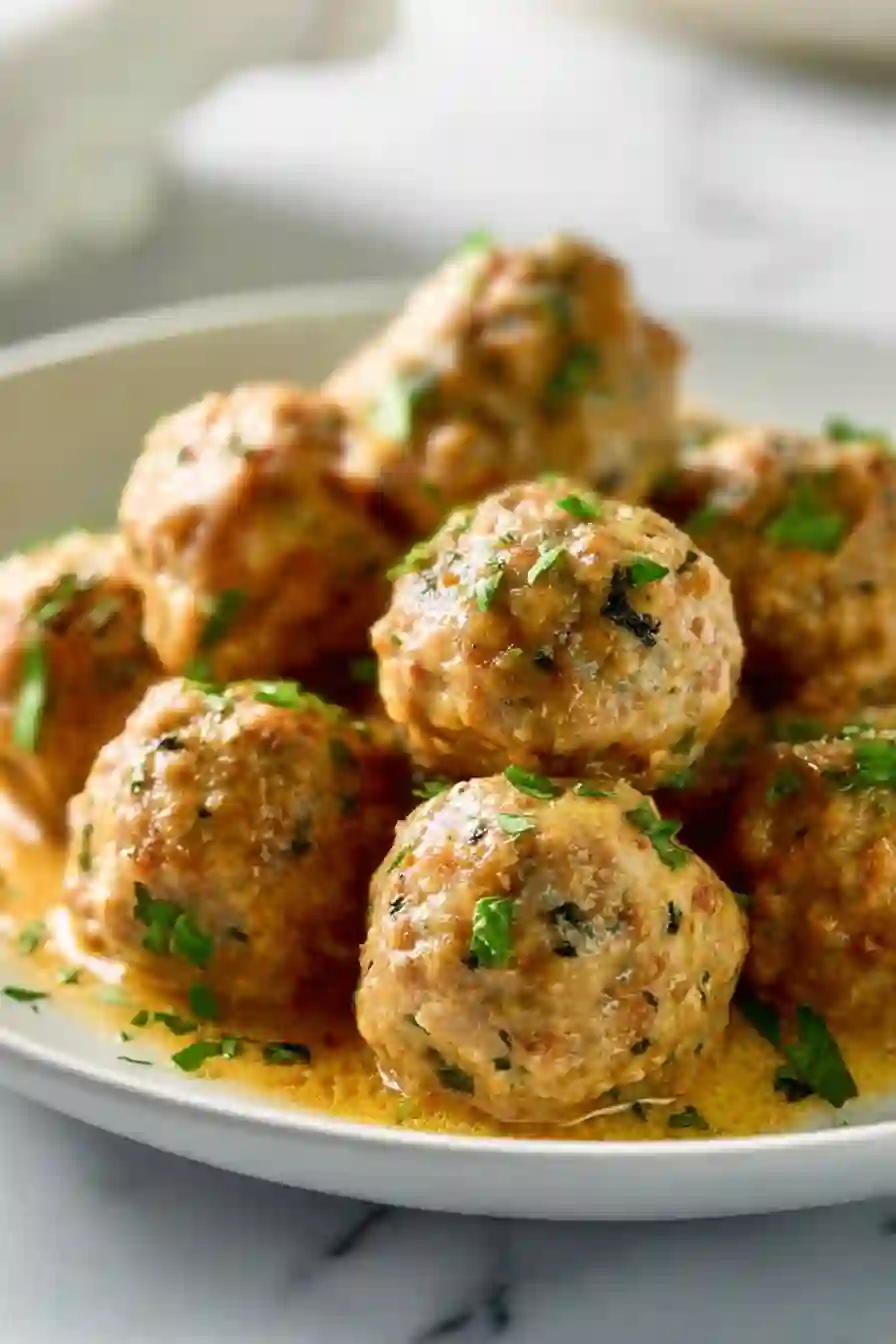
One batch can move between pasta, rice bowls, salads, wraps, and vegetables without feeling like the same meal every time. The main technique is simple: mix gently, shape lightly, and cook just until the center reaches a safe 165°F after resting.
Table of Contents
- Ingredients That Shape the Flavor
- Why These Turkey Meatballs Stay Tender
- How the Cooking Process Comes Together
- Texture Fixes for Better Meatballs
- How They Fit Into a Balanced Meal
- Recipes to Make Next
- Turkey Meatball Questions
- Best Ways to Serve These Turkey Meatballs
- Ingredient Swaps and Fat Choices
- Common Mistakes to Avoid
Ingredients That Shape the Flavor
Base Ingredients
Start with 1 pound of 93% lean ground turkey. It gives you a lean base with enough structure for meatballs, while the egg helps bind the mixture so it holds together during baking or pan frying.
Two tablespoons of plain Greek yogurt add moisture and a little extra protein. More importantly, the yogurt helps offset the dryness that can happen with lean poultry.
Flavor Boosters
Half a cup of panko breadcrumbs creates the right texture they’re lighter than traditional breadcrumbs and help the meatballs stay tender. Half a cup of freshly grated Parmesan adds umami, saltiness, and richness without requiring extra fat.
Three cloves of minced garlic and beef bouillon add savory depth to a lean mixture. Use bouillon carefully, because it can add a lot of salt depending on the brand.
Optional Additions
Fresh basil, parsley, and rosemary give the brightest flavor, but dried herbs work if you reduce the amount and give them a minute to hydrate in the wet mixture.
| Ingredient | Why It Works |
| 93% Lean Ground Turkey | Lean poultry base with a mild flavor |
| Greek Yogurt | Moisture and some protein; helps keep the meatballs tender |
| Grated Onion | Natural juices keep meatballs tender; adds flavor without bulk |
| Panko Breadcrumbs | Lighter than traditional; creates tender texture |
| Fresh Herbs | Complex flavor profile; zero calories, maximum taste |
| Parmesan Cheese | Adds richness and umami; a little goes a long way |
Why These Turkey Meatballs Stay Tender
Why This Method Works
The method works by balancing moisture, seasoning, and gentle handling. Over-mixing makes ground turkey dense, so the mixture should look combined, not kneaded like dough.
Grating the onion directly into the bowl captures its liquid, which helps the meatballs stay moist without adding much oil. Greek yogurt supports that same goal while keeping the mixture easy to shape.
Flavor & Texture Advantage
Herbs bring freshness, Parmesan adds salt and umami, and panko gives the meatballs structure without packing them tightly. Beef bouillon is optional, but it can make lean turkey taste more rounded.
The goal is a meatball that slices cleanly, stays juicy in the center, and still works as a lean protein for repeat meals.
How the Cooking Process Comes Together
Preparing the Base
For baking, line a sheet pan with foil and set a rack on top, then spray the rack lightly. The rack lifts the meatballs so hot air can reach more surface area. Preheat the oven to 400°F.
If you’re pan frying instead, line your counter with parchment paper for easy cleanup. Have a large nonstick skillet ready.
Mixing the Ingredients
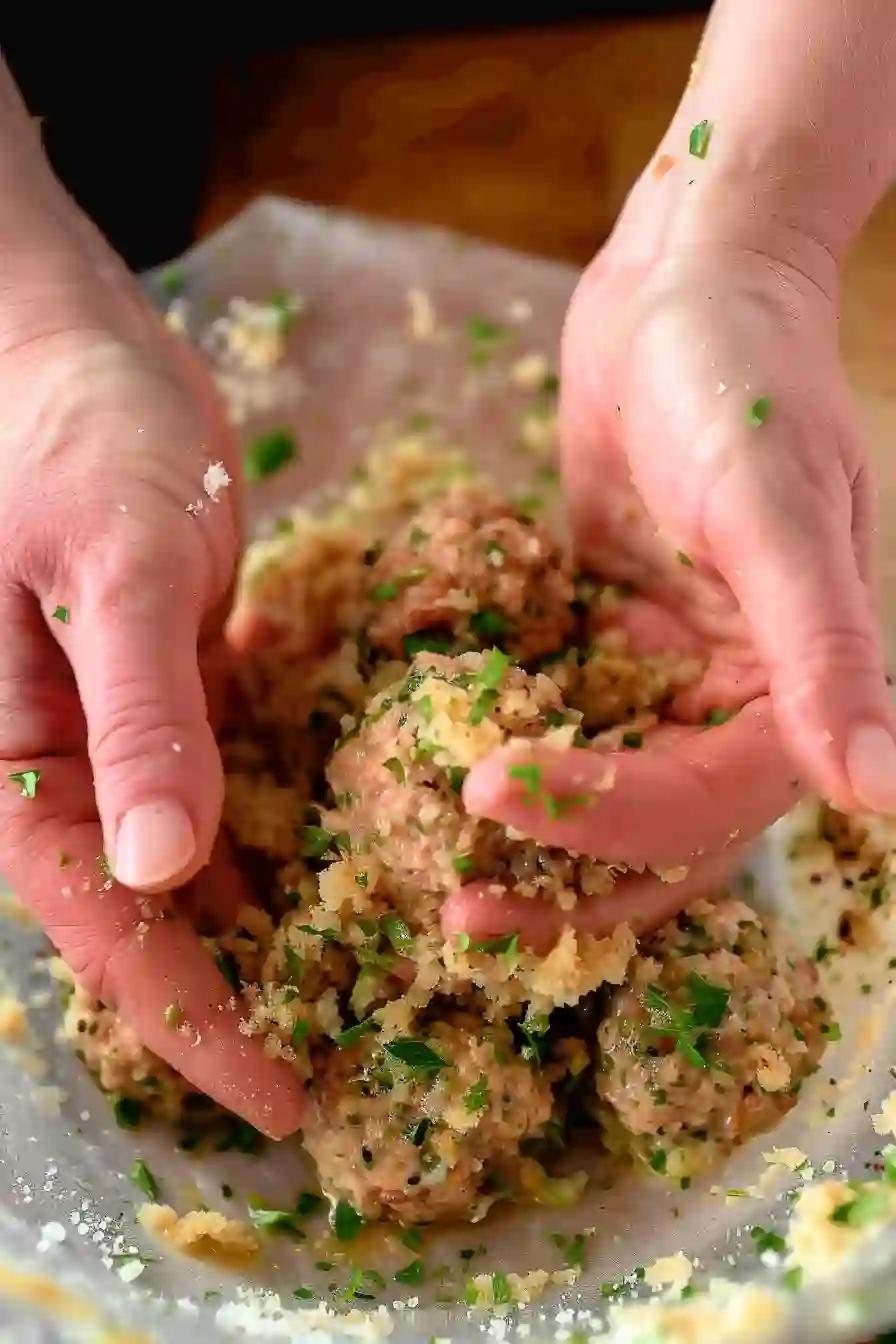
Grate the half small yellow onion on the largest holes of a grater directly into a large bowl. You want both the onion pulp and the liquid; together they should measure about 1/2 cup.
Stir in your egg, Greek yogurt, panko, Parmesan, minced garlic, fresh herbs (or dried), oregano, beef bouillon, salt, and pepper. Mix everything together until just combined, then add your ground turkey.
Mix with your hands just until the turkey disappears into the seasoning mixture. Stop before the mixture turns sticky, which is a sign the meat is being overworked.
Cooking or Baking

Wet your hands or lightly coat them with cooking spray to prevent sticking. Scoop about 1 1/2 tablespoons per meatball and roll gently, using light pressure instead of packing them tight.
For Baking:
Place meatballs on the prepared rack without touching. Lightly brush with olive oil or spray with cooking oil. Bake at 400 degrees F for 16–21 minutes until they reach an internal temperature of 165 degrees F / 74 degrees C. Let rest 5 minutes before serving. Optional: broil for one minute for extra color and a slight crust.
For Pan Frying:
Heat enough olive oil to lightly cover the surface of your skillet over medium heat (medium-low if your skillet runs hot). Working in batches, add meatballs in a single layer without touching. Cook 5–7 minutes until nicely browned all over and cooked through to 165 degrees F / 74 degrees C. Remove to paper towels and keep warm. Repeat with remaining meatballs, adding oil as needed between batches.
Final Assembly
Serve the meatballs right away, or cool them before storing for meal prep. They pair well with marinara, rice, roasted vegetables, salads, or wraps because the seasoning is flexible.

Healthy Turkey Meatballs with Greek Yogurt and Parmesan
Ingredients
- 1 pound 93% lean ground turkey
- 1 large egg
- 2 tablespoons plain Greek yogurt
- 1/2 cup panko breadcrumbs
- 1/2 cup grated Parmesan cheese
- 3 cloves minced garlic
- 1 small onion, grated (approx. 1/2 cup)
- 1 teaspoon dried basil
- 1 teaspoon dried parsley
- 1/2 teaspoon dried rosemary
- 1 teaspoon beef bouillon (optional)
- 1/4 teaspoon black pepper
- Cooking spray (for baking sheet)
Instructions
- Preheat oven to 400°F (204°C). Grease a baking sheet or line it with parchment.
- In a large bowl, combine turkey, egg, Greek yogurt, panko, Parmesan, garlic, grated onion, basil, parsley, rosemary, bouillon (if using), and pepper.
- Gently mix until just combined; avoid over-mixing to prevent rubberiness.
- Shape into 1.5-inch meatballs and place on baking sheet.
- Bake for 16-21 minutes, until the internal temperature reaches 165°F / 74°C. Rest 5 minutes before serving.
- Optional: Brine meatballs in chicken broth or water for 1 hour before baking for extra juiciness.
Notes
Storage: Freeze cooked meatballs in a single layer, then transfer to a zip-top bag for up to 3 months.
Use less panko if reducing carbs further.
Yield is about 24 meatballs; one serving is 4 meatballs.
Refrigerate cooked meatballs for 3 to 4 days and reheat leftovers to 165°F / 74°C.
Nutrition is estimated per 4-meatball serving and excludes optional marinara, pasta, rice, vegetables, wraps, or extra pan-frying oil.
Texture Fixes for Better Meatballs
Why It Turns Dry
Dry meatballs usually come from over-mixing, compact shaping, or cooking past the safe endpoint. Use an instant-read thermometer and aim for 165°F after the 5-minute rest.
Why It Becomes Dense
Dense meatballs usually mean the mixture was packed too tightly, had too much breadcrumb, or did not get enough moisture from the onion and yogurt. If the mixture feels stiff, shape with lighter hands rather than adding more panko.
How to Fix Flavor
If the seasoning seems uncertain, cook a tiny test patty in a skillet and taste that instead of tasting raw turkey. Adjust salt, herbs, or bouillon before shaping the full batch.
How They Fit Into a Balanced Meal
Nutritional Balance
One 4-meatball serving delivers about 22 grams of protein, depending on meatball size and the exact turkey used. Fat and sodium will vary with Parmesan, bouillon, oil, and sauce.
The combination of lean meat, Greek yogurt, Parmesan, and fresh herbs makes these meatballs practical for meal prep. Pair them with vegetables and a steady carb source if you want a more complete meal.
Protein & Satiety
These meatballs are protein-dense because the base is lean turkey supported by egg and Greek yogurt. Pair them with vegetables and a steady carb source if you want a more complete meal.
They work well for meal prep because they reheat quickly and do not need a heavy sauce to taste finished. Keep portions flexible based on the meal you are building.
Recipes to Make Next

Turkey Meatball Questions
Why does the texture fail?
Most often it’s over-mixing (which toughens the meat) or insufficient moisture (from skipping the fresh grated onion). Mix gently and use fresh onion with its juices, and use a thermometer so the meatballs reach 165°F / 74°C without overcooking.
Can I adjust ingredients?
Absolutely. You can substitute dried herbs for fresh (use about one-third the amount). You can skip the beef bouillon if you prefer, though it adds great depth. You can use Italian seasoning if you don’t have individual dried herbs on hand.
How do I store it?
Cooked meatballs keep in an airtight container in the refrigerator for 3 to 4 days. Freeze cooked meatballs in a single layer on a baking sheet, then transfer to freezer bags for up to 3 months. Reheat gently in a 325-degree F oven until they reach 165°F / 74°C.
Can I reduce sugar?
There’s no added sugar in this recipe. If you’re serving with marinara sauce, check the sauce label many store-bought versions contain added sugar. Look for no-sugar-added options or make your own with canned tomatoes and herbs.
Best Ways to Serve These Turkey Meatballs
Serve them over pasta with marinara for a familiar dinner, or over rice with vegetables when you want a simpler meal-prep bowl. The meatballs bring the protein, so the side can stay flexible.
Add to a salad for a simple healthy cooking lunch that’s actually filling. Make sub sandwiches with a little marinara and mozzarella for something more substantial.
They can also be served with a small bowl of marinara as a snack or appetizer. For meal prep, chill them quickly and store in portions so they are easy to reheat.
For a casual dinner, serve the meatballs with roasted peppers and onions, or add them to skewers after cooking. Cooked meatballs hold together better than raw ones on skewers.
Ingredient Swaps and Fat Choices
Fat Choice (Oil vs. Cooking Spray)
A light brush or spray of olive oil before baking gives you a tender exterior without adding significant fat. If you’re baking, spray is perfectly effective. If you’re pan frying, you’ll need a bit more oil for browning, so the final fat content will depend on how much oil the batch absorbs.
Base Alternatives
Ground turkey is the leanest fit for this version, but 93% lean ground beef or ground chicken can work in the same proportions. The texture and fat content will shift slightly, so check doneness by temperature rather than timing alone.
Common Mistakes to Avoid
- Over-mixing the meat: This makes them tough. Mix just until combined your hands should barely need to work.
- Skipping the grated onion: Those juices are what keep them tender and flavorful. Don’t substitute with minced onion.
- Cooking above 400 degrees F: Higher temperatures can dry the outside before the inside is done. Bake at 400 degrees F and let the meatballs rest to finish safely.
- Crowding the pan when frying: Meatballs need space to brown. Cook in batches.
- Not seasoning the raw mixture: Taste it before adding the turkey. Adjust salt and pepper then, not after cooking.
- Using low-fat Greek yogurt without checking: Standard plain yogurt works fine; just use the same amount.