Shakshuka works because it turns a simple tomato sauce into a full breakfast with eggs, peppers, onion, garlic, and warm spices. This version keeps the pan light but still gives you a sauce thick enough to hold the eggs in place.

The difference between a thin tomato skillet and a satisfying shakshuka is simmer time. Letting the tomatoes reduce before adding the eggs gives the sauce body, while the eggs add protein so the meal feels more complete.
Use it for breakfast, brunch, or a quick breakfast-for-dinner plate. The main cues to watch are a gently bubbling sauce, visible wells for the eggs, and whites that are just set before you pull the pan from the heat.
Return to the Healthy Breakfast Guide for more hearty breakfast idea
Table of Contents
Table of Contents
Why This Shakshuka
Why This Method Works
Two tablespoons of olive oil are enough to soften the onion and pepper and bloom the spices without making the sauce greasy. Paprika, cumin, and chili powder should hit the hot oil briefly before the tomatoes go in, which gives the sauce a deeper flavor.
The eggs are poached directly in the sauce, so the yolks mix with the tomatoes as you eat. That gives the dish richness without needing cream, and it keeps the meal centered on eggs, vegetables, and herbs.
Flavor & Texture Advantage
Creating small wells gives each egg a place to settle instead of spreading across the pan. Keep the sauce at a gentle simmer so the whites set while the yolks stay soft, then cover briefly if the tops need help cooking.
Fresh cilantro and parsley are added after cooking because their job is freshness. They cut through the tomato and egg richness and make the final spoonfuls taste lighter.
Ingredients Breakdown (What Actually Matters)
Base Ingredients
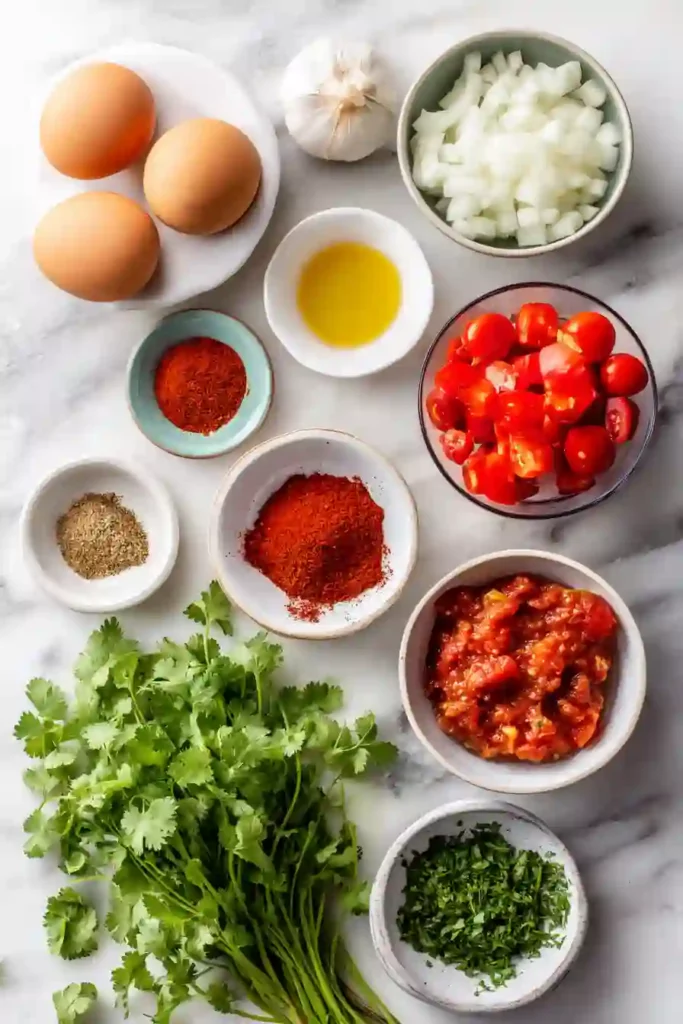
The base starts with olive oil, onion, and red bell pepper. Cook them until the onion turns translucent and the pepper softens; this gives the canned tomatoes a sweeter base instead of a raw, sharp one.
A 28-ounce can of whole peeled tomatoes gives the sauce enough liquid to simmer down, while 6 large eggs make the skillet substantial. Break the tomatoes into uneven pieces so the sauce has texture instead of turning completely smooth.
Flavor Boosters
The spice blend is warm rather than aggressive: paprika for roundness, cumin for earthiness, and a small amount of chili powder for heat. Stir the spices into the oil before adding tomatoes so they do not taste dusty.
Optional Additions
Feta adds salt and tang, spinach wilts quickly into the sauce, and diced zucchini adds volume if you want more vegetables. Whole grain bread is best served on the side or toasted fresh, since it will soften if stored with the sauce.
| Ingredient | Why It Works |
|---|---|
| Olive Oil | Adds richness and helps soften the onion and pepper |
| Eggs | Add protein and help turn the tomato sauce into a more substantial skillet meal |
| Tomatoes | Rich in lycopene and fiber; creates natural acidity that balances richness |
| Bell Pepper | Adds sweetness, texture, and color |
| Spices | Add warm flavor so the sauce tastes layered before the eggs go in |
Step-by-Step Method (Optimized for Best Results)
Preparing the Base

Heat the olive oil over medium heat, then add the onion and red bell pepper. Cook for about 5 minutes, stirring occasionally, until the onion is translucent and the pepper has softened; browning is welcome, but burnt edges will make the tomato sauce taste bitter.
Building Aromatic Depth
Add 4 finely chopped garlic cloves and cook for just one minute. This is the sweet spot long enough for garlic to release its flavor, short enough to avoid bitterness. Now add your spices: 2 teaspoons paprika, 1 teaspoon cumin, and ¼ teaspoon chili powder.
Creating the Sauce
Pour the entire 28-ounce can of whole peeled tomatoes (including juice) into the pan. Using a large spoon, break down the tomatoes into smaller pieces. Season generously with salt and pepper, then bring the sauce to a gentle simmer.
Let the sauce bubble softly for 2-3 minutes, or a little longer if it looks watery. You want it thick enough that a spoon can make shallow wells that do not immediately fill back in.
Poaching the Eggs

Use a spoon to make 6 small wells, then crack one egg into each well. Cook for 5-8 minutes depending on yolk preference: closer to 5 minutes for runny yolks, closer to 8 minutes for firmer yolks.
If the whites are slow to set, cover the pan and reduce the heat to medium-low. Check often, because covered eggs can move from soft to firm faster than expected.
Final Finish

Remove the pan from the heat before adding cilantro and parsley. The herbs should stay bright and fresh, not wilt into the sauce, so add them just before serving.

Shakshuka Recipe: Easy Healthy Breakfast
Ingredients
- 2 tablespoons olive oil
- 1 medium onion
- 1 red bell pepper
- 4 garlic cloves
- 28 ounce can whole peeled tomatoes
- 6 large eggs
- 2 teaspoons paprika
- 1 teaspoon ground cumin
- ¼ teaspoon chili powder
- Fresh cilantro and parsley for garnish
Instructions
- Heat olive oil in a skillet over medium heat
- Sauté chopped onion and red bell pepper until softened
- Add minced garlic and cook for 1 minute
- Stir in the whole peeled tomatoes and their juices, breaking them up with a spoon, then add paprika, cumin, and chili powder.
- Simmer sauce for 10-15 minutes
- Create small wells in the sauce by carefully scooping space
- Crack eggs into the wells, cover, and cook until the whites are fully set and the yolks are cooked to your preference.
- Stir in fresh cilantro and parsley just before serving
Notes
Served best with warm whole grain bread for a filling breakfast
Sauce can be made ahead and refrigerated overnight
Nutrition is estimated per one-sixth of the skillet and excludes bread, yogurt, feta, and other optional sides or toppings.
Reheat leftovers gently until hot throughout.
Texture & Cooking Fix Guide
Why Eggs Turn Rubbery
Rubbery eggs usually mean the sauce was boiling or the pan stayed covered too long. Keep the sauce at a gentle simmer and remove the pan from the heat as soon as the whites set; the yolks will continue to thicken from residual heat.
Why the Sauce Becomes Too Thin
If the sauce is too thin, simmer it uncovered before adding the eggs. A thicker sauce holds the wells better and keeps the eggs from spreading into uneven ribbons across the pan.
Why Flavor Seems Flat
If the flavor is flat, check salt and acid after the eggs cook. A pinch of salt sharpens the tomato base, and a small squeeze of lemon can wake up the herbs without making the sauce sour.
Smart Ingredient Comparison
Olive Oil vs. Other Fats
Olive oil fits this recipe because the pan stays at medium heat and the flavor works with tomato, cumin, and paprika. Butter can brown too quickly here and can make the sauce taste heavier than it needs to.
Using Fresh vs. Canned Tomatoes
Canned whole tomatoes are reliable for shakshuka because they bring both tomato pieces and juice. Fresh tomatoes can work in season, but they usually need more simmering time and more salt to reach the same sauce body.
Common Mistakes to Avoid
- Using too much oil: This adds unnecessary calories without improving texture. 2 tablespoons is perfect for 6 eggs and vegetables.
- Skipping the well-making step: Gently pushing the sauce aside creates pockets where eggs cook evenly and stay connected to flavor.
- Overcooking the eggs: Rubbery eggs ruin the entire dish. Cook until whites set but yolks are still slightly soft they continue cooking off-heat.
- Not seasoning the sauce: Season the tomato sauce before adding eggs. Trying to season after means unevenly seasoned bites.
- Cooking on high heat: Medium is perfect. High heat causes the sauce to splatter and eggs to cook too fast on the outside, raw on the inside.
Best Ways to Serve This Shakshuka
With whole grain bread: Toast the bread and use it for scooping sauce and yolk. Keeping it on the side preserves texture better than placing it under the shakshuka.
With fresh greens: A small arugula salad with lemon vinaigrette gives the plate a crisp contrast to the warm tomato sauce.
Standalone with yogurt: Add a spoon of plain Greek yogurt after cooking for extra creaminess and a cool contrast to the spices.
For meal prep: Store the tomato sauce and eggs in glass containers for 3-4 days. Reheat gently at medium-low heat so the eggs warm through without turning rubbery.
Is This Shakshuka Healthy?
Nutritional Balance
Each serving is relatively light, but the eggs give it more staying power than tomato sauce alone. Eggs are a high-quality protein source, and pairing them with vegetables makes the skillet more useful as a breakfast than a plain sauce.
The balance comes from eggs for protein, olive oil for cooking fat, and tomatoes, pepper, onion, and herbs for vegetable volume. Add bread, yogurt, or greens depending on how filling you want the meal to be.
The spices do the flavor work without needing a heavy sauce. Blooming paprika, cumin, and chili powder in oil gives the tomatoes a warmer profile, so you can season carefully instead of relying only on salt.
Eggs & Balance
This shakshuka is filling because eggs, vegetables, and sauce are cooked together in one pan. It is not meant to replace every breakfast need; it gives you a flexible egg-and-vegetable base that can be made lighter or heartier with the side you choose.
For a practical morning routine, the strength is repeatability: the ingredients are simple, the cooking cues are visible, and the serving can be adjusted with bread, yogurt, greens, or extra eggs.
FAQ
Why does my texture come out watery or too thick?
Watery sauce means you didn’t simmer long enough before adding eggs. Simmer for 3-5 minutes to reduce slightly. Too-thick sauce means you overcooked it add a splash of water and stir gently.
Can I adjust the spices or ingredients?
Absolutely. Increase cumin for earthiness, reduce chili powder for less heat, or add smoked paprika instead of regular. Fresh spinach, mushrooms, or zucchini all work beautifully just sauté them with the onions and peppers.
How do I store leftovers?
Cool completely, then transfer to an airtight glass container. Refrigerate for 3 to 4 days. Reheat gently in a skillet at medium-low heat with a splash of water until hot throughout; use the stovetop for best texture.
Can I make this ahead for meal prep?
Make the sauce completely, then cool and refrigerate. Store separately from the eggs for best texture. When ready to eat, reheat the sauce, then poach fresh eggs into it. Takes just 8 minutes from cold sauce to finished dish.
What if I don’t like runny yolks?
Cook for 8-9 minutes instead of 5-6. Cover the pan with a lid to speed cooking. The yolks will set while whites remain tender. Some prefer this texture; it is equally flavorful and keeps the eggs tender.
You’ll Also Love These Recipes